
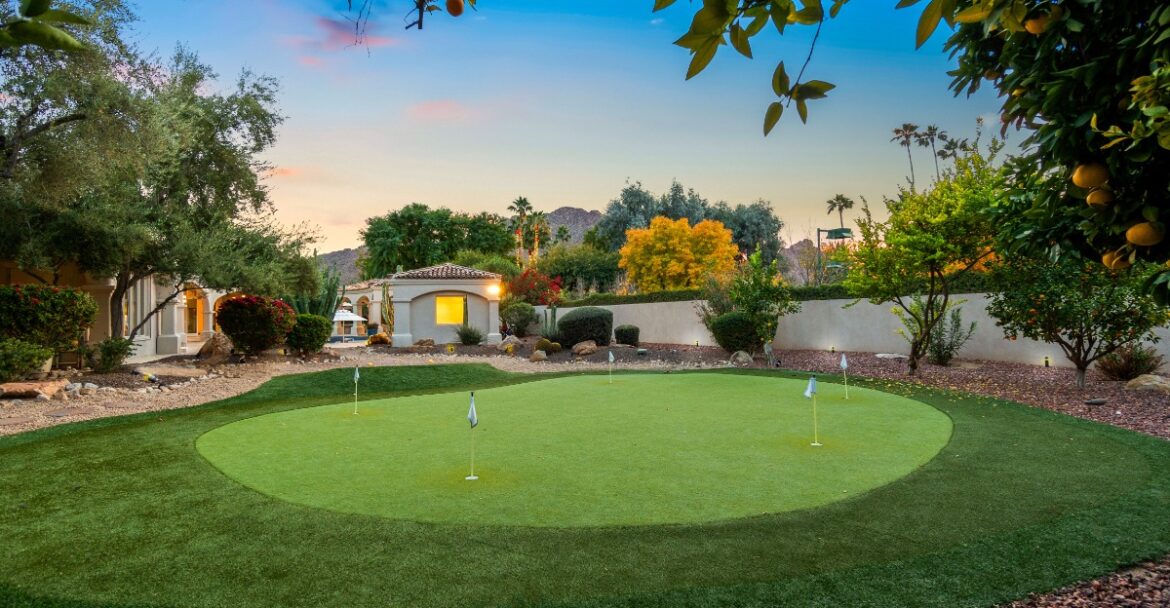
Plan on a putting green in your yard or inside your home? You may wonder what the best spot for it is. How to choose the best spot for your putting green depends on factors like available space and the type of golf practice you want at home. Some locations give you far more room to work with than others. Let’s go over what to consider so you can choose a spot that fits your property and the way you want to use your green.
Choose a Spot With Enough Usable Space
The right amount of space depends on the type of practice you want. A compact area works for short putts, while a longer section gives you more distance between the ball and cup.
Usable space also includes room for your stance. You don’t want to stand against a wall, fence or garden bed every time you line up a shot. Leave enough room around the turf so you can address the ball as you would on a golf course.
Your available square footage sets the limits of the design before turf selection even enters the picture.
Put Convenience High on Your List
A home green gets far more use when it sits somewhere you already spend time. A spot near the patio gives you easy access while you’re outside, while an indoor space near your office works well for quick practice between other tasks.
A remote corner of the property may offer enough room, but access still deserves some thought. If reaching the green takes extra effort every time, it may not fit your routine as well as a closer option.
The best location should make practice easy to fit into your day.
Give the Layout Enough Length
You don’t need a wide section of yard to get useful practice space. A narrower area can still give you enough room for longer putts if it stretches far enough.
That can make spaces beside a patio or along the side of your home worth a closer look. Even if the area isn’t large overall, the extra distance may give you more room to practice than a shorter space with more square footage.
When you compare locations, pay attention to how far you can putt from one end to the other.
Keep the Slope Within Reason
 Some slope can give you more variety when you practice, but a steep section of yard may require substantial site work before it suits a putting green.
A mild grade gives you more flexibility with the final layout without forcing major changes to the land. If you have several possible spots, the gentler section will often require less correction before installation.
That makes slope worth comparing early, especially if you want to keep site prep from becoming more involved than necessary.
Stay Away From Low Spots
Low areas collect water after rain, which makes them poor candidates for an outdoor green unless the site receives extra drainage work. Water should have a route away from the turf rather than sit beneath or across the surface.
If you’re unsure about a spot, check it after a storm. Standing water or soil that stays saturated means the area may need more drainage work before installation.
A spot where water drains away without pooling gives you fewer drainage issues to account for during site prep.
Leave Room Around Fixed Features
A fence or tree can shrink the usable area more than it first appears. The measurements between those features matter because you still need enough room for the turf and your stance.
The same rule applies near walls indoors. A room may technically fit the green, but the space can get cramped if furniture or structural features sit too close to your practice line.
Measure from the actual boundaries you’ll work around. That gives you a more accurate idea of how much space the green can occupy without interfering with the rest of the property.
Keep the Green Out of Main Walkways
Foot traffic can make a poorly placed green frustrating to use. A path between the house and gate, for example, may cut straight across the area you want for golf.
That problem matters for businesses too. A commercial green works better when guests or employees don’t have to cross it as part of normal foot traffic.
Look at how people already move through the property before you commit to a location. A quieter section gives you space to practice without constant interruptions and keeps the green from becoming a shortcut from one part of the property to another.
Check Indoor Ceiling Height
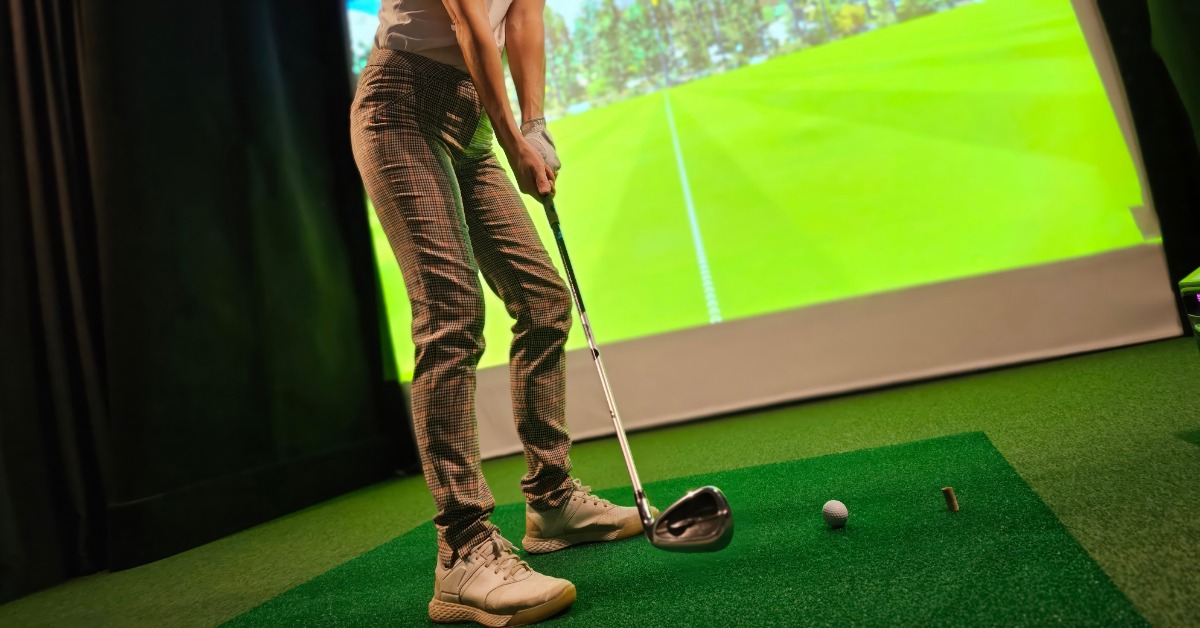 An indoor putting green doesn’t need the same ceiling height as a full golf simulator. That gives you more flexibility with spare rooms, offices and other interior spaces.
Still, future plans deserve some thought. If you expect to add equipment that requires a full swing later, the ceiling needs enough height for that setup from the start.
Match the Spot to Your Practice Style
Your preferred practice style should influence how much space you dedicate to the green. A simple setup works well if you mainly want repetition on shorter putts.
A larger area gives you more room for varied distances and different shot lines. That doesn’t mean bigger always works better. Extra square footage only adds value when you plan to use it.
Think about the type of practice you want most. That gives you a better idea of how much space your putting green actually needs.
Pick a Spot That Fits Your Property
Choosing the best spot for your putting green comes down to the space you have and the type of setup you want at home. A good location should give you enough room without creating problems elsewhere on the property.
At JUS Turf, we sell putting greens in San Diego. After you settle on a location, bring your measurements to our warehouse. Our experienced team can help you choose turf that fits your project and the amount of space you have.